What is Neurofeedback?
Train Your Brain. Transform Your Life.
What if your brain could learn its way out of anxiety, brain fog, sleepless nights, and scattered focus — without medication? That’s exactly what neurofeedback does. Think of it as physical therapy for your brain: a gentle, drug-free workout that teaches your brain to find calm, focus, and balance on its own.
And here’s the best part: you don’t have to do anything. You sit back in a comfortable chair, watch a movie or play a game, and your brain does the learning — automatically.
Watch neurofeedback tune the brain.
An anxious brain is out of tune. Neurofeedback shows the brain its own reflection — and it returns to the frequencies God designed.
“He restores my soul.” — Psalm 23:3
How Does Neurofeedback Work?
Your brain is electric — it hums along in patterns called brainwaves. When those patterns get stuck (too revved up, too sluggish, or stuck in survival mode), you feel it: anxiety, inattention, insomnia, overwhelm.
During a neurofeedback session, small sensors rest on your scalp and simply listen to your brainwaves — nothing goes in, no shocks, no needles, nothing invasive. As you watch a screen, the software gives your brain instant feedback, gently rewarding balanced, healthy patterns. Session by session, your brain practices being calm and focused — until that becomes its new normal.
At Pneuma’s BrainParlor Neurofeedback Spa in Mandeville, our team has logged over 400 hours of professional neurofeedback training and more than 7,000 client hours using state-of-the-art BrainMaster and NeurOptimal® systems.
“Your brain is trapped in the darkness inside your skull. It relies on your senses — your eyes seeing, your ears hearing, your skin feeling — to feed information back so it can make corrections. All brain activity is movement, frequency, and vibration that can be captured by an electrode, mathematically incorporated into visual and auditory stimulation, and fed directly back to the brain. It’s like showing your brain a mirror of what it’s doing — and when your brain sees itself clearly, it makes corrections. It is very powerful.”
— Sarah R. Probst, LPC-S
How It All Began: A Note From Our Founder
In 2014, I was working at a physical therapy clinic for children in Oregon. Week after week, I watched kids come in completely dysregulated — no eye contact, squirming, crying, tantruming — barely able to participate in their own therapy.
Then something I couldn’t explain started happening. A few weeks later, those same children were walking in calm. Focused. Happy. Fully engaged in their physical therapy. I started asking their parents, “What on earth are you doing?” And one after another, they gave me the same answer: neurofeedback. I had never even heard the word.
So I went and got trained. As part of the training, we practiced neurofeedback on each other — and here’s the thing: I had struggled with attention deficit my entire life. Within a week, it was so significantly improved that on the plane ride home I found myself reading a book in the middle seat, a person on either side of me, focused and comprehending every page. I could never have imagined reading on a plane before that. It felt like a complete miracle. I kept asking my trainers, “Do I get to keep my brain?”
That’s where it all began. Since then, I’ve watched hundreds upon hundreds of clients drastically improve — calmer, clearer, sleeping better — and many, working alongside their prescribing physicians, have been able to reduce or even come off their medications.
It changed how I practice EMDR, too. I used to practice EMDR without neurofeedback as a first step, and it was a completely different experience. Clients processing trauma or painful relationships could become extremely dysregulated — sometimes so drained they missed work the next day. I believe EMDR has even gotten an unfair reputation because of how dysregulating it can be. But when we administer neurofeedback before beginning EMDR, clients stay far more regulated. They bounce back faster, the disturbance and destabilization are significantly reduced, they sleep better, and the improvement is remarkable.
Neurofeedback isn’t as fast as taking a pill — changing your brain takes time — but it is an incredibly powerful modality, and we have seen so many miraculous transformations that we are firm believers.
— Sarah R. Probst, LPC-S, Founder of Pneuma Counseling & Neurofeedback
What Can Neurofeedback Help With?
Decades of clinical use — and our own clients here on the Northshore — report improvement in a remarkable range of symptoms. If you see yourself (or your child) anywhere on this list, neurofeedback may help:
Focus & Learning
- ADHD & ADD symptoms
- Trouble focusing or finishing tasks
- Impulsivity & hyperactivity
- Learning difficulties
- Reading & processing struggles
- Memory problems & brain fog
- Low motivation
- School & test anxiety
- Screen-time overstimulation
- Peak performance (athletes, students, professionals)
Mood & Stress
- Anxiety & panic attacks
- Depression & low mood
- Mood swings & irritability
- Anger & emotional outbursts
- Chronic stress & burnout
- PTSD & trauma symptoms
- OCD tendencies
- Attachment & relationship struggles
- Dissociation & feeling "checked out"
- Grief overwhelm
Brain & Body
- Insomnia & sleep problems
- Nightmares & restless sleep
- Migraines & headaches
- Traumatic brain injury (TBI) & concussion recovery
- Stroke recovery
- Seizure disorders
- Autism spectrum challenges
- Sensory overwhelm
- Cerebral palsy support
- Chronic fatigue
Don't Take Our Word for It — Watch Real Stories
These videos are from our own BrainParlor library — real people, real transformations: veterans, families, moms, and kids whose brains learned a new way to live.
PTSD: A Marine’s Experience
An Entire Family’s Success Story
ADHD & Neurofeedback
Keep watching — more real stories from our BrainParlor video library:
- 🎬 Miracles Every Day
- 🎬 Real Moms Tell All: Chantel | Ann | Angela
- 🎬 Autism & Neurofeedback
- 🎬 Brain Scans Before & After Neurofeedback for PTSD
- 🎬 Overcoming “Chemo Brain”
- 🎬 Addiction & Substance Abuse After Neurofeedback
- 🎬 What People Are Saying After NeurOptimal®
- 📚 Explore our full video & research library at BrainParlor.com
What Is a Session Like?
Honestly? It’s the easiest appointment you’ll ever have. You settle into a comfortable chair at our BrainParlor Neurofeedback Spa, we place a few small sensors on your scalp, and you watch a show or movie for about 30–45 minutes. That’s it. No needles, no medication, no side effects to push through — and kids genuinely love it.
Most clients begin noticing shifts — calmer mornings, deeper sleep, longer focus — within the first handful of sessions, with results that build and hold over time because your brain has learned a new way of operating.
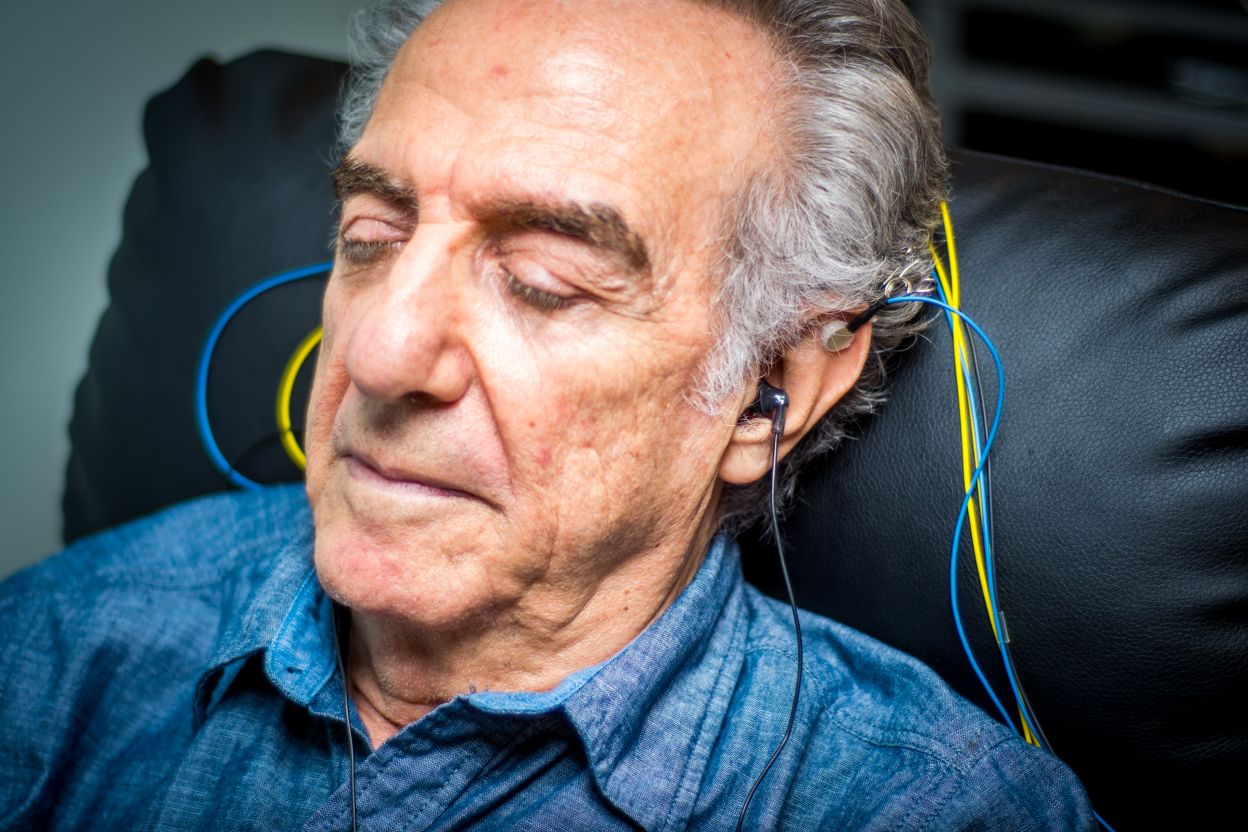
Deep relaxation, zero effort — your brain does the work.
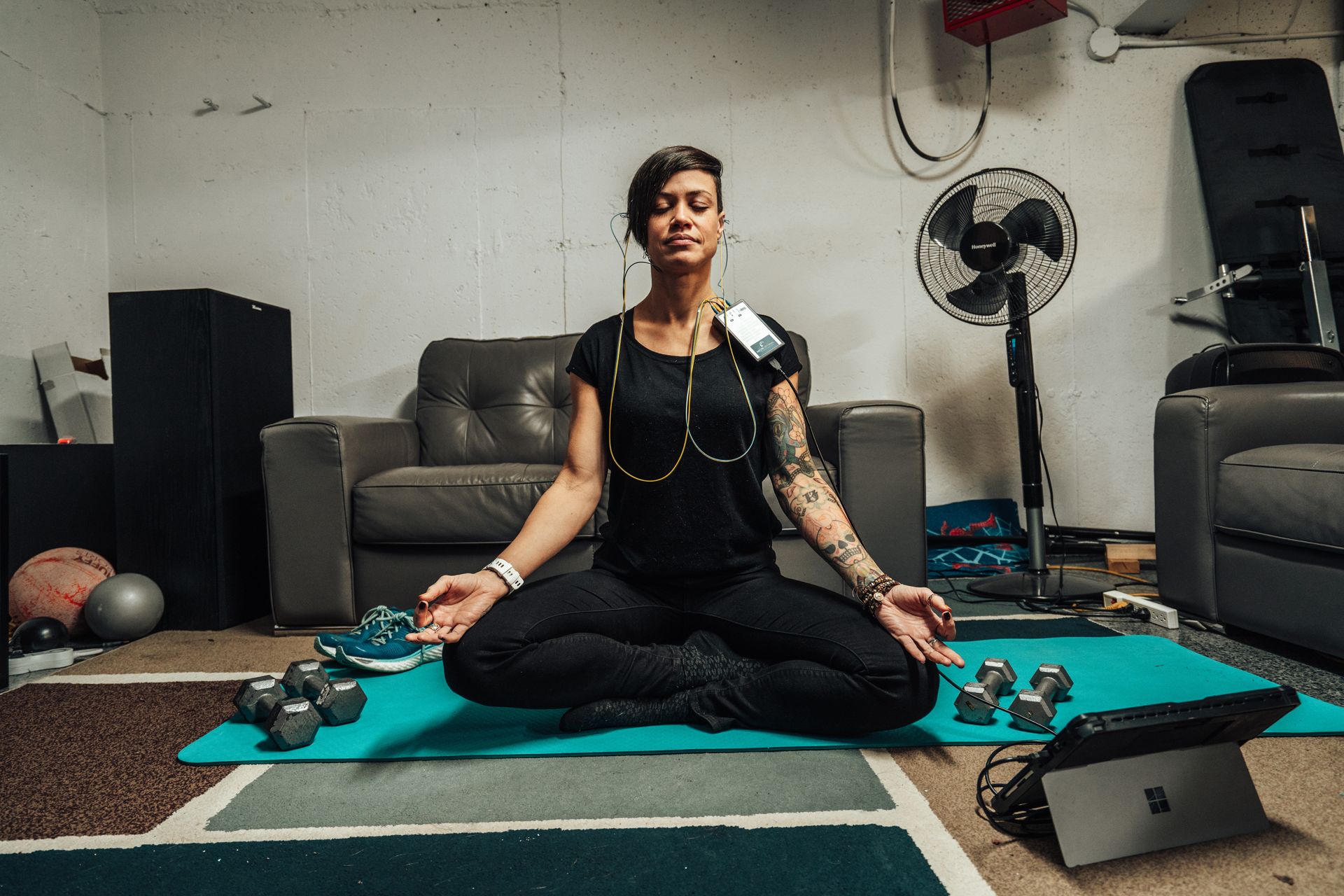
Calm is trainable. Session by session, it becomes your new normal.
Your Brain Can Change. Let Us Show You.
You’ve tried pushing through. You’ve tried willpower. Maybe you’ve tried medication. If your brain is stuck in patterns that aren’t serving you — or your child is struggling and you’re out of ideas — neurofeedback offers a different path: train the brain itself.
Serving Mandeville, Covington, Madisonville, and the entire Northshore. Reach out today and ask about a neurofeedback consultation.
Powered by Industry-Leading Technology